Disclaimer: Dextroamphetamine is a controlled substance. Always consult with a qualified healthcare provider regarding your specific medical condition and medication regimen.
If you or a loved one has recently been diagnosed with Attention-Deficit/Hyperactivity Disorder (ADHD) or narcolepsy, you have likely encountered the name dextroamphetamine. It is one of the most well-known and widely prescribed medications in the world, yet it is often surrounded by confusion, stigma, and questions.
What exactly is it? How does it help? And perhaps most importantly, is it safe?
In this comprehensive guide, we will break down the science, the uses, the side effects, and the safety protocols surrounding dextroamphetamine to help you have a more informed conversation with your healthcare provider.
What Is Dextroamphetamine?
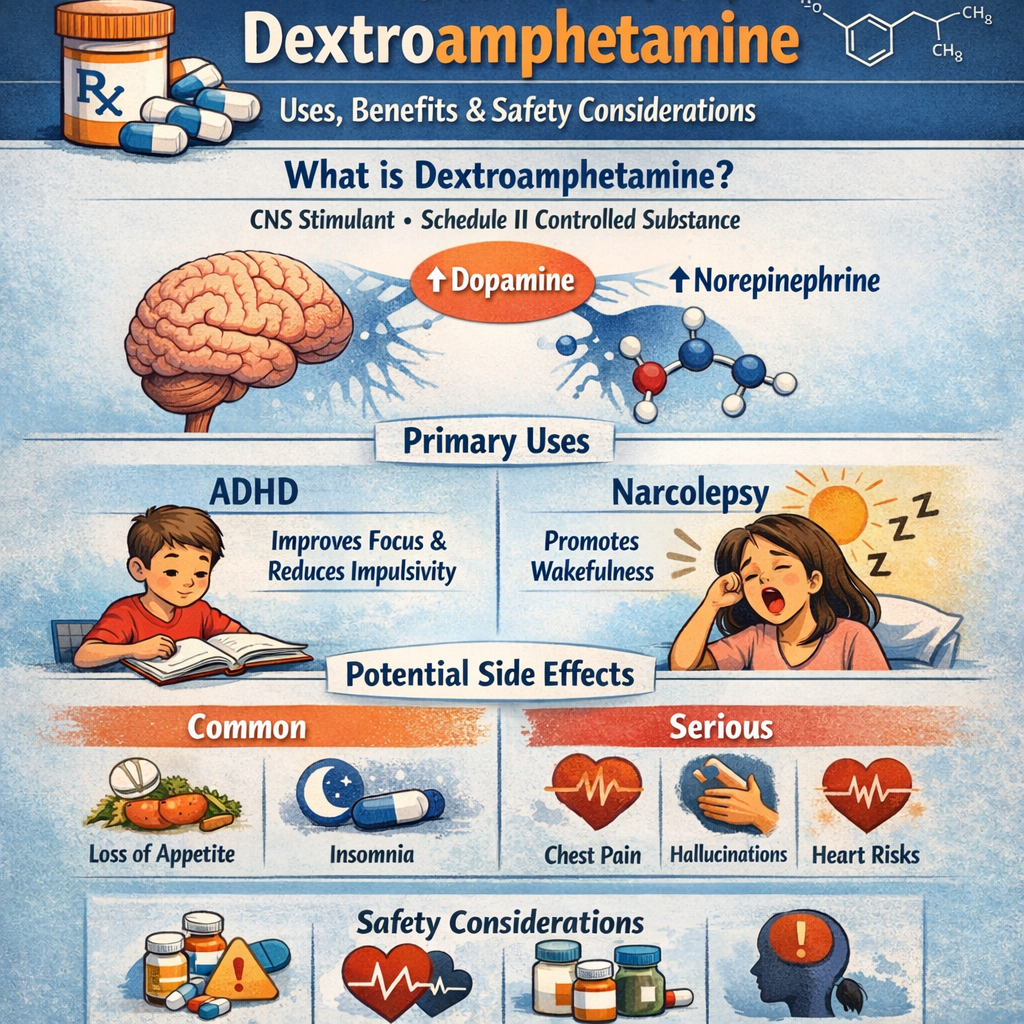
Dextroamphetamine is a central nervous system (CNS) stimulant. It belongs to a class of drugs known as amphetamines. Chemically, it is the dextrorotatory enantiomer of amphetamine, which means it is the specific form of the molecule that is more potent in stimulating the central nervous system.
In the United States, it is classified as a Schedule II controlled substance. This classification indicates that while the drug has accepted medical uses, it also carries a high potential for abuse and dependence. Consequently, it is strictly regulated and requires a prescription that cannot be refilled without a new authorization from a doctor.
Common Brand Names
You may know dextroamphetamine by various brand names or as part of combination medications, including:
- Dexedrine (pure dextroamphetamine)
- Adderall (a mixture of amphetamine salts, including dextroamphetamine)
- Zenzedi
- ProCentra
How Does It Work?
To understand how dextroamphetamine works, we have to look at brain chemistry. The medication primarily affects two key neurotransmitters: dopamine and norepinephrine.
- Dopamine: Associated with reward, motivation, and focus.
- Norepinephrine: Associated with alertness, energy, and the “fight or flight” response.
In individuals with ADHD, the regulation of these neurotransmitters is often inefficient in the parts of the brain responsible for executive function (planning, focusing, and impulse control). Dextroamphetamine increases the availability of these chemicals in the brain, helping to improve communication between nerve cells.
The Result: For a patient with ADHD, this doesn’t mean “getting hyped up.” Instead, it often results in a calming effect, improved ability to sustain attention, reduced impulsivity, and better organizational skills.
Primary Medical Uses
1. Attention-Deficit/Hyperactivity Disorder (ADHD)
This is the most common use. Dextroamphetamine helps patients manage the core symptoms of ADHD:
- Inattention
- Hyperactivity
- Impulsivity
Visit the shop for adhd support
It is used in both children and adults as part of a comprehensive treatment plan that may also include therapy, education, and lifestyle changes.
2. Narcolepsy
Narcolepsy is a chronic sleep disorder characterized by overwhelming daytime drowsiness and sudden attacks of sleep. Dextroamphetamine promotes wakefulness and helps patients stay alert during the day.
Potential Side Effects
Like all medications, dextroamphetamine can cause side effects. Most are manageable, but some require medical attention.
Common Side Effects
- Decreased appetite and weight loss
- Dry mouth
- Trouble sleeping (insomnia)
- Headache
- Stomach upset
- Nervousness or jitteriness
- Increased heart rate or blood pressure
Serious Side Effects
While rare, serious side effects can occur. Contact a doctor immediately if you experience:
- Chest pain or shortness of breath
- Fainting
- Hallucinations or paranoia
- Uncontrolled movements (tics)
- Signs of circulation problems (numbness, pain, or skin color changes in fingers or toes)
- Serotonin syndrome (agitation, hallucinations, fever, sweating, shivering, fast heart rate, muscle stiffness, twitching, loss of coordination, nausea, vomiting, or diarrhea).
Risks and Safety Warnings
Because dextroamphetamine is a potent stimulant, safety is paramount.
1. Potential for Misuse and Dependence
Taking this medication exactly as prescribed is crucial. Misusing stimulants (taking higher doses, crushing pills, or using without a prescription) can lead to addiction, severe psychological dependence, and overdose. Never share your medication with others.
2. Heart Health
Stimulants can increase blood pressure and heart rate. Patients with pre-existing heart conditions, structural heart defects, or high blood pressure should discuss these risks thoroughly with their cardiologist and psychiatrist before starting treatment.
3. Drug Interactions
Dextroamphetamine can interact dangerously with other medications, particularly MAO inhibitors (MAOIs) (a type of antidepressant). Combining these can lead to a hypertensive crisis. Always provide your doctor with a full list of supplements and medications you are taking.
4. Mental Health Considerations
In some cases, stimulants can exacerbate anxiety, bipolar disorder, or psychosis. A thorough psychiatric history is necessary before prescribing.
Tips for Patients Taking Dextroamphetamine
If your doctor prescribes this medication, here are some best practices for managing your treatment:
- Take it Early: To avoid insomnia, take your dose as early in the day as possible.
- Monitor Nutrition: Since appetite suppression is common, try to eat a healthy breakfast before the medication kicks in and plan for nutritious meals later in the evening when the effects wear off.
- Track Your Symptoms: Keep a journal of how you feel, your focus levels, and any side effects. This helps your doctor adjust the dosage accurately.
- Regular Check-ups: You will likely need regular monitoring of your blood pressure, heart rate, and weight.
- Do Not Stop Abruptly: Stopping suddenly after long-term use can cause withdrawal symptoms (fatigue, depression, sleep disturbances). Always taper off under medical supervision.
The Bottom Line
Dextroamphetamine can be a life-changing medication for those struggling with ADHD and narcolepsy. It offers the opportunity for improved focus, better daily functioning, and enhanced quality of life. However, it is a powerful tool that demands respect and responsible use.
Success with this medication relies on a partnership between you and your healthcare provider. Open communication about side effects, concerns, and goals is the key to safe and effective treatment.
If you believe you may benefit from dextroamphetamine, or if you have concerns about your current prescription, schedule an appointment with your healthcare provider today or Visit the shop for adhd support or About Us for more guidelines